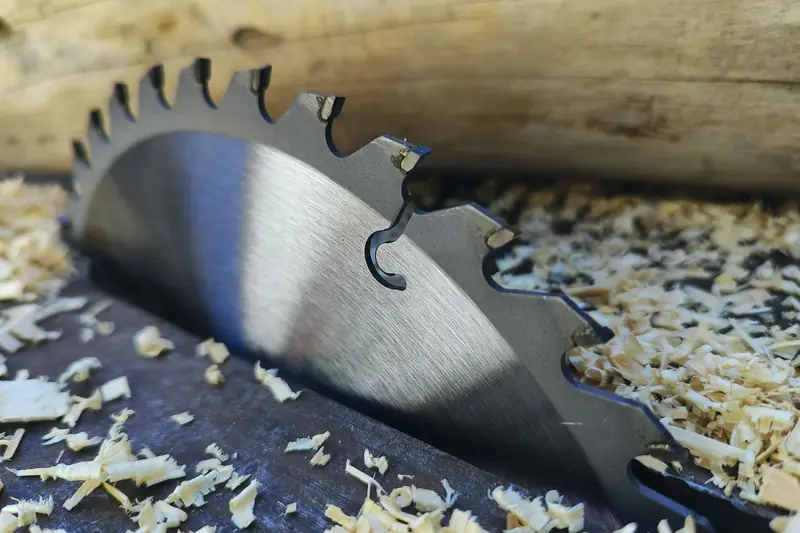
Best Portable Table Saws (Jobsite and Benchtop)
A portable table saw feeds wood past a blade that sticks up through a flat table, which makes it the tool for ripping boards and plywood to width. The choice comes down to rip capacity and fence quality, the blade guard and riving knife system, and how easily the saw moves and sets up. This page is for homeowners building shelves, cabinets and outdoor projects who want accurate straight cuts.
Jump to section
What we look for
Rip capacity and fence
rip capacity sets the widest board or panel you can cut, and the fence sets how straight the cut comes out.
Blade guard, riving knife and anti-kickback device
these parts stand between your hands and the blade.
Blade-contact injuries and skin-sensing brakes
blade contact injuries are common, and many are serious.
Portability and stand
a saw that is hard to move or set up tends to stay in the corner.
Corded or cordless
a cordless saw goes anywhere, and a corded saw runs without a battery limit.
Dust port and noise
table saws throw a lot of dust and are loud.
- Sources: manufacturer product pages, manuals and warranty terms, plus the CPSC table saw rulemaking in the Federal Register, the 2025 withdrawal notice, OSHA's table saw guidance and NIOSH.
How to choose the right table saw
Measure the widest board or panel you will rip, and buy a saw with that rip capacity. Then check the guard, riving knife and anti-kickback parts, and plan to keep them on. Weigh portability against stability: a rolling stand helps if the saw lives in a garage corner. If you mostly crosscut trim and boards, a miter saw may be the better first saw, and our miter saw vs circular saw comparison helps you decide. Read power tool safety basics before the first cut.
Rip capacity and fence
Check the Rip capacity column against the widest piece you plan to rip, such as half a sheet of plywood. Look for a fence that locks parallel to the blade at both ends and does not flex. OSHA's table saw guidance says to guide the stock parallel to the rip fence to limit kickback (OSHA), so a fence that stays square is a safety feature as well as an accuracy one.
Blade guard, riving knife and anti-kickback device
Since January 2010, the voluntary US standard has called for table saws to come with a modular blade guard and an anti-kickback device attached to a riving knife (CPSC, Federal Register). The riving knife sits behind the blade and keeps the two halves of the cut from closing on it. CPSC found that most blade-contact injuries happen on saws without a blade guard installed (CPSC, Federal Register), so favor a guard that comes off and goes back on without tools.
Blade-contact injuries and skin-sensing brakes
CPSC estimated about 26,500 emergency-department-treated table saw blade-contact injuries in 2017, including 2,800 amputations (CPSC, Federal Register). Some saws use what CPSC calls active injury mitigation: a system that detects contact, or imminent contact, between the blade and a body part and acts to prevent or limit the injury (CPSC, Federal Register). CPSC proposed a performance rule for this, then withdrew it in September 2025 and said it does not intend to issue a final rule (Federal Register), so it remains a feature to look for, not a requirement.
Portability and stand
CPSC describes bench saws as built to be transportable, weighing from 34 to 133 pounds, with the larger ones on folding wheeled stands commonly called jobsite saws (CPSC, Federal Register). Check the Weight and Stand columns, and whether a stand is in the box. A stand that sits firm and level matters as much as the saw itself.
Corded or cordless
CPSC notes that cordless bench saws reached the market in 2016 and typically run on 18 to 60 volt batteries with 8.25-inch blades (CPSC, Federal Register). Check the Blade diameter and Depth of cut columns, since a smaller blade cuts less deep. A corded saw suits long ripping sessions; a cordless saw suits work away from outlets, especially if you already own the batteries.
Dust port and noise
Look for a dust port that fits your shop vac hose. CPSC notes that the universal motor and gear drive used in bench saws produce high noise and vibration (CPSC, Federal Register), so plan on hearing protection, which NIOSH advises in noisy areas (NIOSH).
Tips for using your table saw
- Use a push stick for small pieces and to feed stock past the blade, as OSHA advises (OSHA).
- Stand to the side of the blade, not behind it, and keep your hands out of the line of the cut (OSHA).
- Leave the blade guard and riving knife on. CPSC found that most blade-contact injuries happen on saws without a guard installed (CPSC, Federal Register).
- Keep the blade sharp and set to the right height, since OSHA lists a wrong blade height and a poorly kept blade as causes of kickback (OSHA). Your manual gives the height to use.
- Wear eye and hearing protection; NIOSH lists power tools among equipment around 85 to 90 dBA (NIOSH).
FAQ
What is the difference between a jobsite saw and a benchtop saw?
Both are bench saws built to be moved. CPSC describes jobsite saws as the larger, heavier-duty versions on folding wheeled stands (CPSC, Federal Register).
What causes kickback?
OSHA describes kickback as the blade catching the stock and throwing it back toward the operator, and lists wrong blade height and poor blade upkeep as causes (OSHA). A riving knife, an anti-kickback device and a straight fence help.
Are skin-sensing blade brakes required?
No. CPSC proposed a performance rule but withdrew it in September 2025 and said it does not intend to issue a final rule (Federal Register).
How common are table saw injuries?
CPSC estimated 26,500 blade-contact injuries treated in emergency departments in 2017, and 96.4 percent of them involved the finger (CPSC, Federal Register).
Related
-

Buying guide
Best Miter Saws for Beginners and Home Projects
Blade size, sliding or fixed, bevel and dust port, side by side.
-

Buying guide
Best Cordless Circular Saws
Blade size, cut depth, brake and weight, plus the safety checks.
-

Comparison
Miter Saw vs Circular Saw: Which Saw Should You Buy First?
Repeatable crosscuts and angles vs rips and sheet goods.
-

-

Buying guide
Best Workbenches for Garage and DIY
Load capacity, top material, height and storage, compared.
-

Guide
How to Use a Circular Saw Safely: A Beginner Guide
Guard, blade depth, support, kickback and grip, step by step.


Get the Before-You-Cut Safety Checklist
A printable 8-point check to run before you cut, drill or charge: guards, blade depth, clamping, protection and batteries. Free, and sized for the shop wall.