How to choose the right cordless drill
A drill looks simple until you meet the labels. Start with our guide to choosing a cordless drill, and read drill vs impact driver if you are not sure which one you need.
Battery platform
Choose the battery family, not just the drill. Most makers sell many tools that share one battery and charger, which makes later purchases cheaper and simpler. Look at the range the maker offers for the jobs you expect: saws, a shop vac, a multi-tool. Batteries and chargers from different makers do not mix, and the maker's own charger is the only one to use (NY DHSES). Our cordless drill buying guide explains the idea in more detail.
Voltage class
Compact 12V drills are lighter and fit tight spaces. The 18V/20V MAX class is stronger and suits larger bits and long screws. The two labels are the same class: DeWalt explains that "20V MAX" is the maximum initial battery voltage, measured without a workload, and that nominal voltage is 18 (DeWalt). Check the Voltage column in the table and match it to your biggest job, not your average one.
Brushless motor
Brushless motors work without brushes to apply friction. Makita claims its brushless motors are up to 50% more efficient than a comparative model, and that an 18V battery will last almost twice as long as with a standard motor (Makita). That is a maker claim, not a measured result. Read how the two motor types differ in our brushless vs brushed comparison.
Chuck size
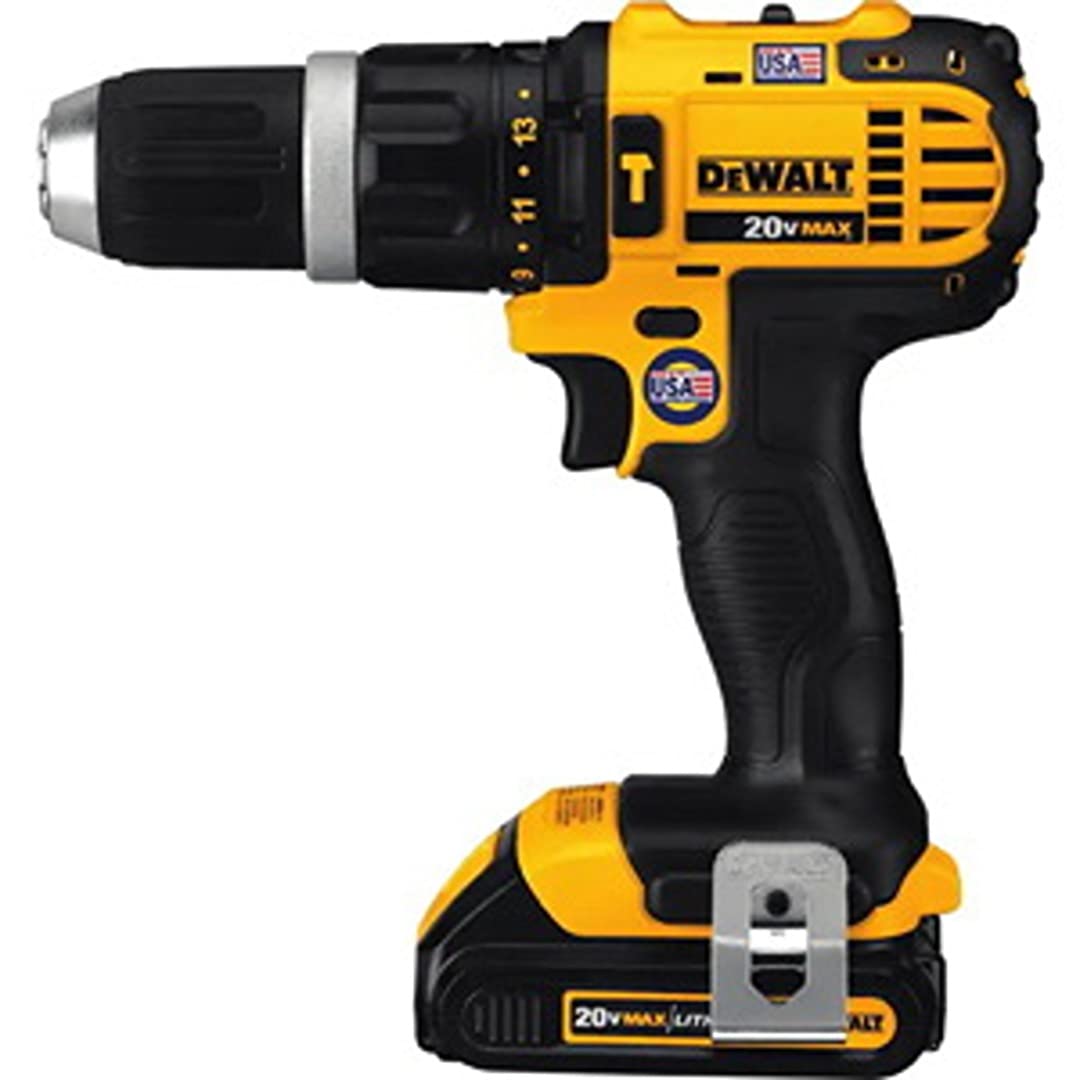
The chuck is the part that grips the bit. Drills commonly come with a 3/8-in or a 1/2-in chuck, and the larger one takes larger bit shanks. As an example of a spec listing, DeWalt's entry combo kit page describes its drill with a 1/2-in single-sleeve ratcheting chuck (DeWalt kit page). Check the Chuck size column against the biggest bit you expect to use.
Clutch and two-speed gearbox
The clutch is the numbered ring behind the chuck. It slips at the setting you choose so you do not strip screws or sink them too far. A two-speed gearbox lets you run low for driving and high for drilling. The same kit page lists two speed ranges for its drill (DeWalt kit page). Look at the Clutch settings and Speeds columns; more settings mean finer control.
Weight and kit contents
Weigh the drill with its battery, since you hold both. Then look at what is in the box. Bigger amp-hour packs run longer but weigh more. For scale, DeWalt's entry combo kit ships with two 1.3 Ah batteries (DeWalt kit page). Check that a charger and a bag or case are included, and read the Batteries included column. A lighter drill is easier on your arm for overhead work, while a heavier pack gives longer runtime.